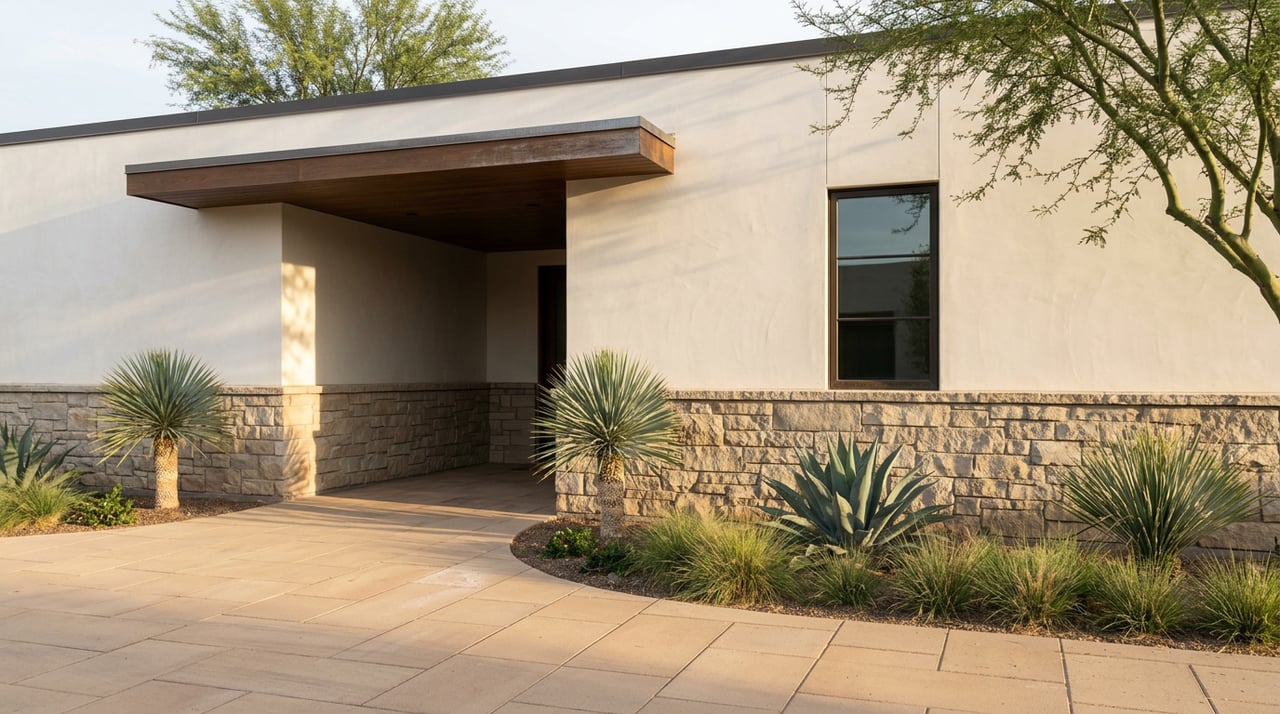
Two listings, same asking price, same square footage, same month on the MLS. One sits in a Green Valley subdivision. The other sits inside Lake Las Vegas, maybe in Vita Bella or one of the North Shore neighborhoods. A buyer running the numbers side by side sees identical purchase prices and assumes identical monthly payments. That assumption is where the plan usually breaks.
The mortgage payment might match almost exactly. What doesn't match is everything layered on top of it. Lake Las Vegas is built on a tiered association structure that most portal listings only partially capture, and the gap between the number on Zillow and the number on the resale documents can run into hundreds of dollars a month. For a buyer comparing this community to the rest of Henderson on price alone, that gap is the whole story.
Why One Property Can Carry Four Separate Bills
Every property in Lake Las Vegas pays into a community-wide Master Association, no exceptions. Current dues run about $459 per quarter, roughly $153 a month, and that fee covers the basics: road maintenance, common area landscaping, streetlighting, and the shared infrastructure that keeps a 320-acre development running. This is typically the only figure that shows up in the "HOA" field on a third-party listing site.
It is rarely the only fee attached to the property. If the home sits on the guard-gated South Shore side of the lake, there's a second, sub-master association layered on top, currently running about $1,017 per quarter, close to $339 a month, funding the manned gate and South Shore-specific common areas. Beyond that, nearly every individual neighborhood inside the master plan carries its own sub-association, covering street-level landscaping, private pools, and amenities specific to that pocket of the community. Single-family sub-HOA dues generally land somewhere between $85 and $185 a month, though the full range across all product types stretches from roughly $50 to $500 depending on gating and amenities. Buy a condo or townhome, and there's often a fourth line item: a building-specific HOA running $300 to $850 a month, since attached product frequently bundles exterior maintenance, insurance, and sometimes utilities into that fee.
Stack four layers on one property and the "$153 a month HOA" listed online can understate the real number by several hundred dollars.
What Each Layer Actually Funds
| Layer | Typical Monthly Cost | Applies To | What It Covers |
|---|---|---|---|
| Master Association | ~$153 | Every property in Lake Las Vegas | Roads, common landscaping, streetlighting, shared infrastructure |
| South Shore sub-master | ~$339 | Guard-gated South Shore properties only | 24/7 manned gate, South Shore common areas |
| Neighborhood sub-HOA | $50-$500 | Most individual subdivisions | Local landscaping, private pools, neighborhood amenities |
| Condo/building HOA | $300-$850 | Attached product only | Exterior maintenance, insurance, elevators, sometimes utilities |
A single-family home on the North Shore might carry just two of these layers. A condo in a gated South Shore building could carry all four at once.
The Outliers That Catch Buyers Off Guard
A handful of communities inside Lake Las Vegas break the standard pattern entirely, and they're worth naming because a generic HOA disclosure won't flag them until the resale documents arrive.
The "V" at Lake Las Vegas carries two separate sub-association dues on top of the master fee, together running roughly $350 a month plus another payment just under $600 every quarter. The structure traces back to a plot inside the gated community that Centex, the original developer, held aside for a planned set of upscale townhomes. Those units were never built, but the association framework created to govern them stuck around, which is why a buyer in "V" sees two sub-HOA statements where a neighboring community shows one.
The hotel condos in MonteLago Village, including buildings like Viera and Luna Di Lusso, run their own dual-HOA arrangement, with fees that scale by unit square footage rather than a flat rate. The bigger surprise in those buildings isn't the monthly dues. It's the transfer fee. Most Lake Las Vegas associations charge around $200 to set up a new owner's account, and on a property with two or three associations, those fees stack but stay modest. In Viera and Luna Di Lusso specifically, the transfer fee can run as high as 2 percent of the purchase price. On a $500,000 condo, that's $10,000 due at closing, typically paid by the buyer, though the split can be negotiated into the contract.
The Bond Nobody Explains at the Open House
A separate charge shows up on some Lake Las Vegas tax bills that isn't technically an HOA fee at all: a Local Improvement District assessment, or LID. When the land was originally developed, the city installed infrastructure like sewers, streets, and lighting, and instead of folding those costs into the home price, the developer deferred them into a bond attached to each parcel, payable semi-annually over a term that typically runs 10 to 20 years.
The balance depends entirely on the individual property. Older homes on the North Shore tend to carry small remaining balances at this point, while some builders on newer parcels paid the LID off entirely at the time of land purchase, meaning a comparable-looking new build might carry none at all. Because the bond is tied to the parcel and not the owner, it transfers at resale regardless of who's selling. A buyer can check the exact remaining balance before writing an offer by pulling the parcel's assessor number and looking it up through the Assessment Management Group at amgnv.com.
Why the Median Price Swings So Hard From One Report to the Next
Anyone cross-referencing Lake Las Vegas pricing across two sources has probably already noticed the numbers don't agree. One market report puts the July 2026 median sold price at $495,000, up 3.1 percent year over year, based on 55 closed sales that month totaling roughly $30.16 million in volume, with homes taking a median of 41 days to go under contract. A different tracking source shows a February 2026 median of $596,000, down close to 11 percent year over year, with homes averaging 110 days on market across 85 sales that month.
Neither number is wrong. They're measuring different months, different sample sizes, and a market where inventory ranges from $300,000 condos to multimillion-dollar lakefront estates inside the same zip code. With as few as 55 to 85 closings in any given month, a handful of high-end waterfront sales or a cluster of entry-level condo closings can swing the median by six figures without the underlying market actually moving that much. Median price is a noisy signal here by nature. The fee structure attached to a specific property is a far steadier one, which is exactly why it deserves more attention than the headline number gets.
The Paperwork Clock Once You're Under Contract
Nevada law gives buyers a defined window to review HOA documents before contingencies come off, and in a community with multiple associations attached to a single property, that window gets more complicated to track. Under the state's common-interest community statute, the seller has two days after contract ratification to order the resale documents, and each association involved then has up to 10 days to deliver its own set. Once received, the buyer has five days to review them, and silence during that period counts as approval.
On a property with only a master fee, that's one document set to track. On a South Shore condo carrying a master, a sub-master, a neighborhood sub-HOA, and a building HOA, that's potentially four separate deliveries landing on different days, each starting its own review clock. Missing one because it arrived quietly in an inbox is how buyers end up waiving review rights on the association whose reserve study actually mattered.
What This Means for Comparing Neighborhoods
The mistake isn't choosing Lake Las Vegas. It's comparing it to the rest of Henderson using only the purchase price. Two homes at the same list price here can carry monthly costs hundreds of dollars apart depending on whether they sit inside a guard gate, inside a condo building, or inside a neighborhood like "V" with its own layered history. The honest comparison happens at the resale document stage, not the search results page, and it happens layer by layer rather than fee by fee.
If you're weighing a Lake Las Vegas property against something elsewhere in the valley, the conversation worth having isn't about the sticker price. It's about which layers apply to that specific address and what they add up to before you ever sign anything.
Frequently Asked Questions
Does every property in Lake Las Vegas pay the same HOA fees? No. Every property pays the master fee, but sub-association dues, South Shore's additional sub-master fee, and condo-building fees depend entirely on the specific subdivision or building, and they can differ by hundreds of dollars a month between neighborhoods.
How do I find the exact combined fee before making an offer? The resale certificate and Common Interest Community documents, ordered after contract ratification under Nevada's disclosure statute, list the current dues for every association tied to that property. Asking to see recent HOA statements before writing the offer can surface the number even earlier.
Are LID balances negotiable at closing? The balance itself is fixed and tied to the parcel, but who pays it down versus who assumes the remaining payments is a term that can be negotiated between buyer and seller in the purchase contract.
Comparing a Lake Las Vegas property against another Henderson neighborhood means comparing more than the number on the sign. If you want a clear read on what a specific address actually costs each month before you write an offer, Balmer Real Estate Group can walk through the layers with you. Schedule a Consultation.
