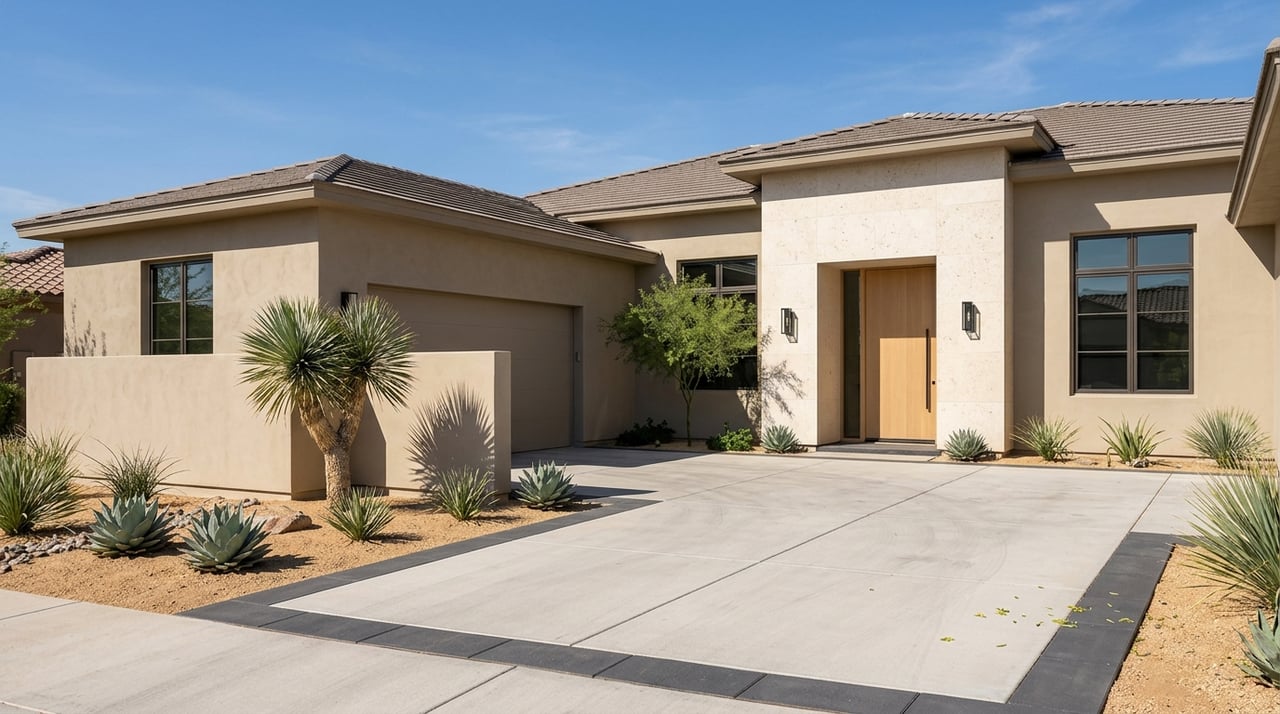
If you have ever wondered why two Summerlin homes with similar square footage can land at very different price points, you are not alone. That question comes up often because Summerlin is not one simple market with one simple answer. When you understand how pricing works here, you can make smarter decisions whether you are buying, selling, or simply tracking value in the area. Let’s dive in.
Summerlin prices start with micro-markets
One of the biggest things to understand is that Summerlin works more like a collection of micro-markets than a single neighborhood. The community covers 22,500 acres on the western edge of Las Vegas, and it is defined by official boundaries rather than one zip code.
That means homes associated with Summerlin can fall in 89134, 89135, 89138, 89144, and parts of 89148. Current Redfin data shows a median sale price around $650,000 for Summerlin overall over the last three months, but the submarkets vary quite a bit.
Here is the broad pricing picture from the research:
- Summerlin overall: about $650,000 median sale price
- Summerlin North: about $513,000 median sale price
- Summerlin West: about $822,000 median sale price
- Summerlin South: about $845,000 median sale price
All three submarkets are somewhat competitive, but differences in days on market and sale-to-list behavior help explain why pricing can shift so much from one area to another. In other words, a home’s address inside Summerlin matters almost immediately when you start talking value.
Village location shapes the first value tier
Within the larger Summerlin master plan, village identity often sets the first pricing tier. That is because each village blends its own mix of location, age of development, access, and overall setting.
The Hills was Summerlin’s first village, while later development expanded into places like The Crossing and The Canyons. Newer areas such as Summerlin West and Redpoint continue to introduce more current floor plans and newer housing stock.
Some villages also carry distinct location advantages. The Paseos is elevated, includes a central park of more than 12 acres, and sits roughly a mile from Downtown Summerlin. South Square is just off I-215 near Gardens Plaza, while The Cliffs sits on a scenic ridgeline near parks, schools, and an indoor aquatic center.
These differences may sound subtle, but they can create meaningful pricing ladders. A buyer is often paying for more than the house itself. They are also paying for where that house sits within the larger community.
Views and lot features can push value higher
In Summerlin, the site itself can be a major value driver. The community’s setting against Red Rock Canyon and the Spring Mountains plays a big role in how homes are perceived and priced.
Official Summerlin materials highlight valley, Strip, and mountain views in villages such as The Paseos, The Cliffs, and The Ridges. Those view lines can create real price separation, especially when they pair with elevation, privacy, or premium lot placement.
The Ridges offers a clear example. It is a guard-gated hillside enclave where custom homesites have sold out, and the last lot releases ranged from $1.95 million to $2.65 million depending on factors like conservation-area adjacency, golf positioning, and added privacy.
Even outside the ultra-premium segment, lot characteristics can change value fast. In Summerlin, details like these often matter:
- Corner lot placement
- Cul-de-sac location
- Oversized parcel size
- Open view corridor
- Added privacy from neighboring homes
- Golf or conservation-area adjacency
When two homes have similar floor plans, these site features can be the reason one sells for meaningfully more than the other.
Age matters, but condition often matters more
Summerlin includes homes from the community’s 1990 start date through 2026 new construction. That creates a wide range of product for buyers to compare, from early-generation homes in established villages to newer homes with current layouts and finishes.
Newer homes in Summerlin West and the Redpoint area are marketed with elevated land, select vistas, and price points from the mid-$400,000s to more than $1 million. Older villages may offer a different kind of appeal, including mature landscaping and more established infrastructure.
That is why age alone does not determine value. A renovated or well-maintained older home can compete very well when the location and features are strong.
A useful example from the research is 608 Del Giorno Street, a 2002 home that sold for $520,000. It was not new construction, but it offered upgraded interiors, a loft, mountain and semi-Strip views, and an oversized backyard near Vista Park. That combination helped it stay competitive.
For buyers, this means you should look beyond the year built. For sellers, it means thoughtful updates and presentation can narrow the gap between an older home and newer competition.
Amenities and convenience support demand
Summerlin’s design is part of its value story. This is an amenity-rich master-planned community, and that built-in convenience often supports buyer demand.
According to official Summerlin materials, the community includes more than 250 parks, more than 150 miles of trails, resident-exclusive community centers and pools, ten golf courses, 26 public, private, and charter schools, a library and performing arts center, Summerlin Hospital Medical Center, neighborhood shopping centers, and Downtown Summerlin.
There is also a planning standard behind many of these features. Every neighborhood is required to have a pocket park, and every village must have at least one major community park.
For many buyers, daily convenience matters almost as much as the home itself. Proximity to parks, trail networks, shopping, healthcare, and major routes like the 215 can add to a home’s appeal and help support pricing.
Why similar homes can sell for very different prices
This is where the Summerlin market gets especially interesting. On paper, two homes may look close in size or layout, but the details underneath the listing sheet can create a large price spread.
One example from Summerlin West shows this clearly. A 2,430-square-foot home at 11813 Pandion Avenue sold for $810,000 and featured Strip and mountain views, a private balcony, an extended covered patio, and upgraded finishes.
Another Summerlin West home at 11695 Ashy Storm Avenue sold for $575,000. It was a quick-move-in corner homesite with a park overlook, but it had a shorter list of premium exterior features.
That price gap shows how view package and site position can outweigh square footage alone. Buyers do not price homes by size only. They price the full experience of the property.
A second example highlights the impact of outdoor living, lot quality, and presentation. A former Toll Brothers model at 742 Puerto Real Court sold for $1.4 million. It had 2,863 square feet, a 9,583-square-foot lot, a pool with waterfall, a built-in grill station, an outdoor fireplace, and a quiet cul-de-sac setting.
By comparison, 11834 Albissola Avenue sold for $1.2 million with 3,168 square feet, an 8,276-square-foot lot, a pool and spa, and two loft areas. Even though it was larger, the model-home pedigree and site quality help explain the higher sale for Puerto Real Court.
What buyers should watch in Summerlin
If you are buying in Summerlin, it helps to compare homes by more than bedrooms, bathrooms, and square footage. A smart comparison should include the property’s village, lot position, privacy, condition, age, and convenience to everyday amenities.
As you evaluate options, pay close attention to:
- Which Summerlin village the home is in
- Whether the lot offers views, privacy, or special positioning
- The age of the home and level of renovation
- Access to parks, trails, shopping, and major routes
- Outdoor living features and backyard usability
- Distinctive details such as former model status or upgraded finishes
This approach gives you a clearer sense of actual value instead of just list-price comparison. It can also help you avoid overpaying for a home that looks similar online but offers less in person.
What sellers should know about pricing
If you are selling in Summerlin, accurate pricing depends on understanding which features create premiums in your specific micro-market. The right strategy is usually more detailed than pulling nearby sales by square footage and calling it done.
Your village, lot placement, views, upgrades, privacy, and proximity to key amenities all matter. A home with a view corridor, cul-de-sac setting, oversized yard, or polished updates may deserve a different pricing strategy than a nearby property with a similar floor plan.
This is where local interpretation becomes important. In a community as layered as Summerlin, the strongest pricing strategy usually comes from reading both the data and the property details together.
The bottom line on Summerlin value
Summerlin home prices are driven by a mix of location, village identity, views, lot quality, age, condition, and amenity access. That is why the market can feel complex at first glance, but it also creates opportunity when you know what to look for.
If you are buying, this helps you understand where premiums are justified and where they may not be. If you are selling, it helps you position your home based on the features that truly influence demand in your part of Summerlin.
When you want a pricing strategy grounded in local detail, discreet guidance, and clear market insight, Dawn Balmer can help you make a confident move.
FAQs
Why are Summerlin home prices so different from one area to another?
- Summerlin is made up of several micro-markets, and pricing varies by submarket, village location, views, lot features, age, condition, and amenity access.
Which part of Summerlin has the highest home prices?
- Current Redfin data in the research shows Summerlin South and Summerlin West above the broader Summerlin median, while Summerlin North sits lower, though the exact premium depends on the specific village and homesite.
Does a newer Summerlin home always have more value?
- No. Newer homes often appeal for modern layouts and finishes, but renovated homes in established villages can still command strong value when location, views, and updates are compelling.
What lot features add value to a Summerlin home?
- Premium features can include mountain, valley, or Strip views, corner lots, cul-de-sac placement, oversized parcels, golf adjacency, conservation-area positioning, and added privacy.
How should you compare Summerlin homes when buying?
- Look beyond square footage and compare village, lot position, view potential, condition, age, outdoor features, and proximity to parks, trails, shopping, and major access routes.
What should sellers focus on when pricing a Summerlin home?
- Sellers should consider the home’s specific micro-market, village, lot quality, privacy, upgrades, views, and nearby amenities rather than relying on square-foot averages alone.
